Narrative and Gesture: Learning Storytelling from Historical Works
Field guide to reading gesture and narrative in older works and translating those insights into sketchbook storytelling and sequential studies.
Gesture as narrative engine
Historical works often communicate story through simplified gesture and staged relationships rather than exhaustive detail. Learning to read and borrow those methods helps you plan sequences and moments in your own visual storytelling.
Observation exercises
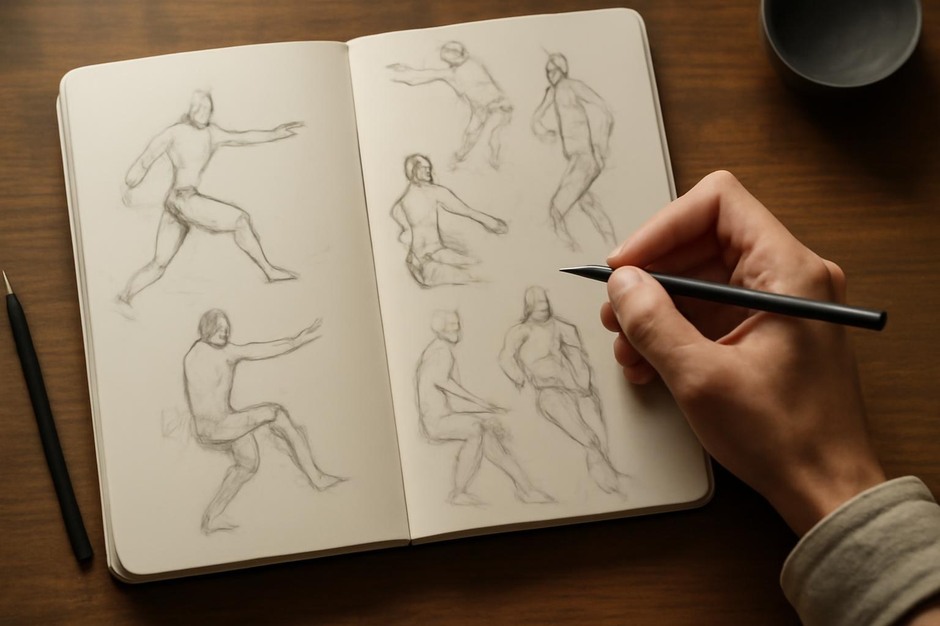
- Single pose study – Choose a figure or group and make a five minute gesture, focused on the tilt and flow of movement.
- Relation lines – Draw faint lines connecting gazes, hands, and edges to see how attention travels through the scene.
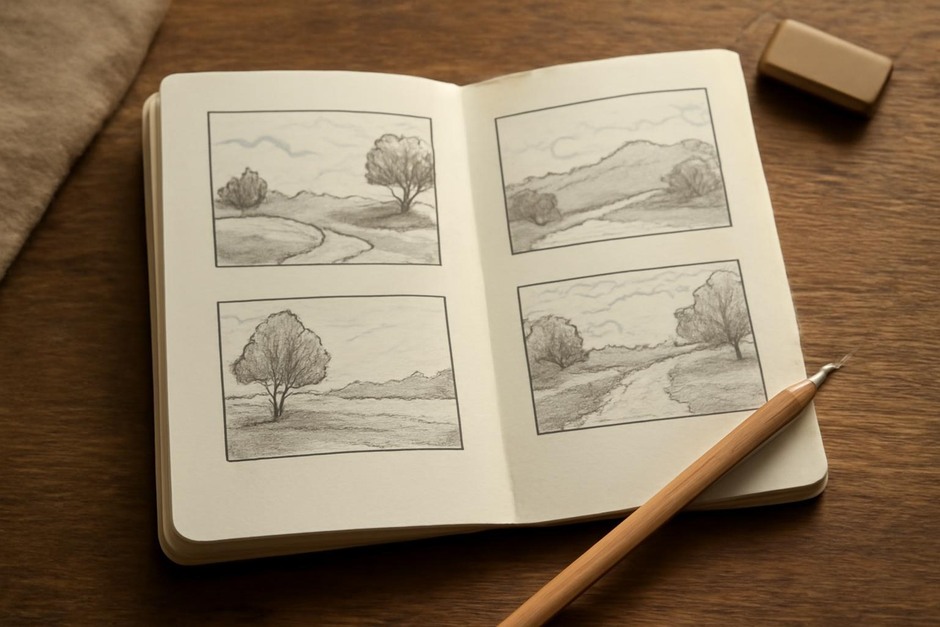
- Sequence thumbnails – Break a short action into three to six thumbnail panels to test pacing.
Sketchbook workflow for narrative
- Pick a moment from a historical scene. Write a one sentence description of the event.
- Make three quick thumbnails showing different viewpoints: wide, medium, and tight.
- For each thumbnail, sketch the main gestures and mark implied lines of motion.
- Choose one thumbnail to expand into a sequence of three panels showing before, during, and after.
Checklist for a narrative study
- One sentence event description
- Three viewpoint thumbnails
- Gesture sketches for principal figures
- Three panel sequence for pacing
- Two short notes: one about gesture clarity, one about timing
Reflection prompts
- Which gesture best communicates intention or emotion?
- How does changing the viewpoint affect the perceived timing?
- What small adjustment improved clarity in the sequence?
Thinking narratively in the sketchbook makes composition choices clearer and faster. Gesture reduces clutter because it prioritizes intention over detail. Historical practice offers many compact models of storytelling; adopting the habit of thumbnails and sequences helps you turn observation into a tool for planning and refining your own visual narratives.